Smart Coaching and Training | Business Support, Consultancy, Mentoring

Transforming Businesses and Lives | Coaching, Mentoring & Training for Excellence

  • Facebook
  • Instagram
  • LinkedIn
  • Twitter


+44 (0)7788425688 | [email protected]


  • Home
    • Coaching News
    • Our Clients
    • About Us
      • Our Team
      • Our Scope
      • Our Approach
      • Social Value
  • People
  • Diversity
    • Artificial Intelligence, Interculturality and Diversity
    • Diversity: Interculturality
    • Diversity: Neuro Diversity
    • Diversity: Cognitive Diversity
      • Profile
    • Diversity: Gender and Sexual Diversity
    • Diversity: Colonialism, Class, Nationality, Ethnicity, Race and Beliefs
    • Diversity: Generational Diversity
    • Diversity: Intersectionality
      • Diversity
  • We Offer
    • Coach
    • Speak
    • Train
    • Consult
    • Wellness at Work
    • Psycho-social Adult Development
  • Profile
    • Behavioural Preference Profiling with C-me
    • Career Preference Profiling with Benchmark
    • C-me comparison to other profiling tools
  • Speak
  • Coach
  • Train
    • Signature Corprate Training, Longer courses and Retreats
    • Workshops and Short Courses
    • On-Line Courses
  • Consult
  • Español
  • Contact

13/03/2026 By David Rigby

Watch, Read and Live Interculturality with Samar

Watch, Read and Live Interculturality with Samar

Authenticity is key to creating memorable experiences

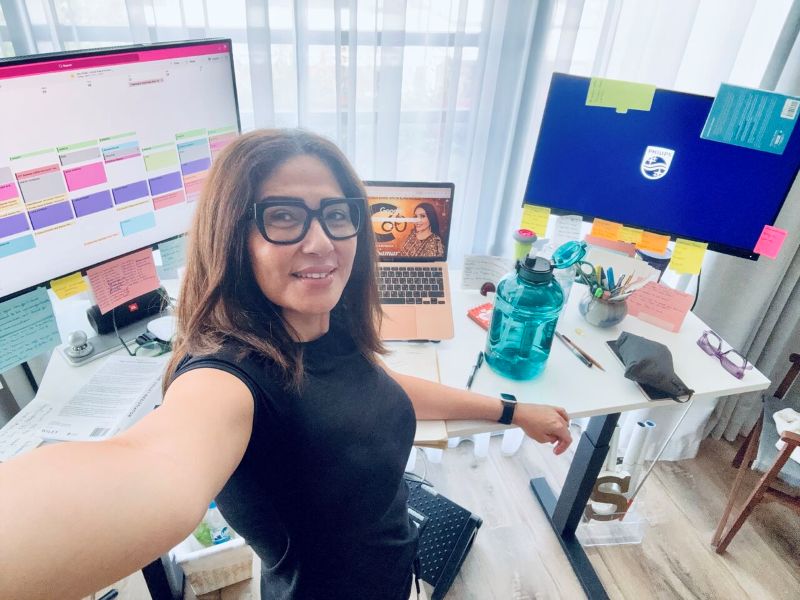
Marhaba! Welcome our new associate Samar Karam see her details here. Read her article about AI below.

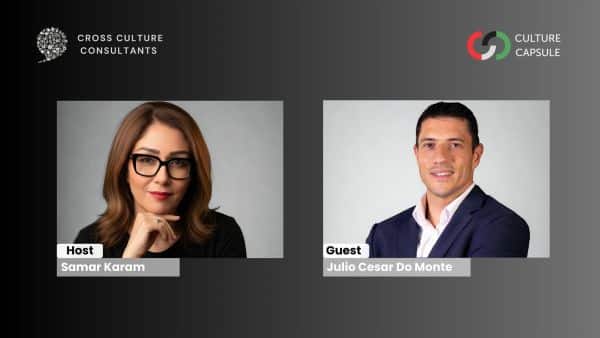
Her ‘Culture Capsule’ podcast on Tue, Mar 17, 2026, 8:00 AM CET features experts and thought leaders from around the world and each episode explores a unique cultural layer that helps you simplify and understand life in the UAE.

“In this episode of ‘Culture Capsule’, I welcome global business leader Julio Cesar Do Monte, a true international executive whose career has taken him across six countries and four continents. Julio currently serves as the Area Vice President Russia, Africa, Middle East and Turkey (RAMET) at Kenvue based in Dubai. Based on his impressive track record in leading multinational companies such as Kenvue, Johnson & Johnson, Boehringer Ingelheim, Unilever, and Danone in complex markets across the Middle East, Russia, Africa, and Turkey, Julio shares what it means to lead in multicultural environments where culture, communication, and adaptability shape success.

Culture Capsule is for expats, visitors, and curious thinkers, anyone who wants to understand the UAE beyond assumptions. Tune in, please click here for full details on how to Attend or on ‘Attend’ in order to be notified when we go live! It will be recorded

Tuesday 17th March 8AM CET or watch the recording
Our conversation explores:

• Life as a global expatriate and how constant relocation shapes perspective
• How international careers impact family life and identity
• Navigating culture shock
• Building trust through human-centered leadership and daily connection with teams
• Supporting employee mental health, resilience, and well-being in challenging times
• How AI tools are transforming productivity and the future of work
• Leading through uncertainty, with lessons inspired by leadership approaches in the UAE

Artificial Intelligence as used in Middle East

A recent LinkedIn posting by Samar Karam

Samar Karam communicating with her fans (the world)

I thought I knew the strategy well enough. Working daily with culture, communication, and expats in the Arab world, I assumed that most AI platforms were more or less smart and equally helpful, interchangeable. I thought that I did my homework!
I was wrong.
If you work, live, visit, or lead in the Arab world, and you still think AI tools are culturally neutral, it’s time to think again. Or let me help with this article.

Why Cultural Intelligence Matters More Than “Smart AI” in the UAE?

In my work with expats, leaders, and relocating families in the UAE, I have learned one simple truth:

Communication fails here, not because people lack talent, but because cultural signals are missed.

That is why I paid close attention, perhaps later than I should have as a professional, to what kind of leadership AI is offering in my Arab world. When the UAE’s Office for Artificial Intelligence introduced the AI in the Ring Index, I did not initially pause to see it for what it truly was: not a technology ranking, but a reflection of cultural intelligence. At the time, I treated most AI platforms as a new tool with a strategy and maybe a threat.

Only recently through patience, research, careful observation, and conversations with trusted peers working in cultural intelligence—did my perspective sharpen. It became clear that not all AI systems lead to equal results when it comes to culture in the Arab world, and that distinction matters deeply in real professional and human contexts.

A Different Kind of Benchmark—and Why It Matters

Unlike typical AI benchmarks that focus on IQ-style problem solving or coding ability, the AI in the Ring Index asked a far more relevant question for life and work in the UAE: an an AI understand Emirati identity, values, and social reality well enough to communicate without causing friction?

To explore this, more than 400 culturally focused questions were designed, generating around 5,200 responses from 11 leading AI models. Model names were deliberately hidden so Emirati evaluators could assess the responses without brand bias—a practice very familiar to those of us who work in cultural assessment.

What Was Actually Measured (And Why Expats Should Care)

Emirati cultural experts evaluated the AI responses across seven deeply human dimensions:

  • Historical and national context
  • Creative and poetic expression
  • Emirati Arabic and dialect use
  • Cultural symbols and shared meanings
  • Social norms and etiquette
  • Social and religious sensitivity
  • Emirati values and ethics

In addition, a custom red-teaming approach pushed models into awkward, sensitive, or ambiguous cultural situations, the very moments where expats and organizations tend to struggle most. Outputs were monitored for bias, misunderstanding, overconfidence, or subtle disrespect. As a cultural trainer, I recognized this immediately: this is exactly how cultural competence is tested in real life.

Why This Matters for Expat Professionals and HR Leaders

For expats working in the UAE, especially in HR, leadership, relocation, and people-facing roles, cultural accuracy matters more than creativity or speed.

When drafting:

  • Arabic-facing emails
  • Ramadan or national occasion messages
  • Policy explanations
  • Leadership communication

The cost of language that is “almost right” can be high.

This is where Gemini emerges as a reliable reference point—not because it is perfect, but because it has been explicitly tested against Emirati cultural expectations. For many expats, Gemini functions best as a cultural calibration tool: “Is this how this would land locally?”

Why Emiratis Working With Expats Can Use ChatGPT Effectively

On the other hand, Emiratis and culturally fluent professionals working with expats often need something different:

  • Explanation
  • Reframing
  • Creative translation between worlds
  • Strategy and structure, often in English

Here, ChatGPT becomes extremely effective because cultural fluency already exists on the human side. The AI supports thinking and articulation it does not replace cultural judgment.

This distinction matters.

Gemini vs. ChatGPT in the Arab World: A Practical View

A clear pattern is emerging across the region: Gemini is becoming the stronger choice for Arabic-heavy and Google-centric workflows, while ChatGPT remains ahead in ecosystem breadth, integrations, and certain creative tasks

For HR, relocation, and leadership teams, this distinction matters far more than raw technical capability.

Arabic Language Quality: Breadth vs. Precision

Gemini

  • Supports 16+ Arabic dialects, including Gulf, Levantine, Egyptian, and Maghrebi
  • Produces Arabic that feels less translated and more native, particularly in Gulf contexts
  • Handles mixed dialect and Modern Standard Arabic (MSA) more naturally in day-to-day writing

ChatGPT

  • Has improved significantly in Arabic and Arabic–English mixed text
  • Still tends to default to more formal MSA
  • Can sound slightly off in Gulf tone, hierarchy, or social pacing

In practice: For everyday Arabic writing emails, HR announcements, internal communications Gemini often sounds closer to how people actually write and speak in the Gulf. ChatGPT remains strong but may require more cultural editing.

Cultural Fit: UAE vs. the Wider Arab World

Gemini aligns particularly well with Emirati and Gulf cultural norms, especially around:

  • Business etiquette
  • Religion-adjacent topics
  • Formality and restraint
  • Professional hierarchy

This makes it especially suitable for:

  • UAE-based organizations
  • Government-adjacent or semi-formal environments
  • Public-facing corporate communication

However, neither model fully captures the diversity of the wider Arab world. Beyond the UAE—into Saudi Arabia, Egypt, the Levant, or North Africa dialect carries deeper social meaning, and “neutral Arabic” can feel emotionally distant.

In these contexts, human cultural review is essential, regardless of the AI used.

Availability and Integration in the Region

Gemini

  • Fully available in Arabic via Gemini and Gemini Advanced
  • Deeply integrated into Google Search, Gmail, Docs, Sheets, Drive, and Maps
  • Especially practical for organizations already using Google Workspace across MENA

ChatGPT

  • Fully available across the UAE and GCC
  • Strong integration with Microsoft 365, Azure, and enterprise systems
  • Widely adopted across institutions and large organizations

Operational reality: Most organizations choose AI not only for language quality—but for where the tool already lives.

Where Each Tool Tends to Win

Gemini excels at:

  • Day-to-day Arabic writing and editing
  • Multi-dialect handling in Gulf contexts
  • Culturally aware Arabic search and chat
  • Seamless use inside Google tools common in MENA

ChatGPT excels at:

  • Broader third-party integrations
  • Microsoft-centric environments
  • Creative and strategic tasks (code, ideation, experimentation)
  • English-first work with occasional Arabic support

The Strategic Insight Most Teams Miss

AI does not fail in the Arab world because it lacks intelligence. It fails when organizations confuse linguistic correctness with cultural belonging.

Used thoughtfully, AI can:

  • Support clarity
  • Reduce friction
  • Accelerate communication

Used carelessly, it can:

  • Flatten nuance
  • Miss hierarchy
  • Undermine trust

In my humble opinion, the responsibility for cultural intelligence still sits with humans. That is the lens through which this conversation should continue.

Smart Coaching & Training works with over 30 associates, in four continents speaking 14 languages. Most raised and working in a wide range of cultures and living in a different place than where they were born . See our associates here.

Many of our associates are experts in AI and love it.

Many of our associates are specialists in Diversity , Interculturality and related topics Read more here and here.

Written by David Rigby © 2026 Smart Coaching & Training Ltd from content from Samar Karam

Filed Under: Being Confident, Change Management, coaching, Cognitive Bias, Emotional Intelligence, Global teams, Interculturality, leadership, Management, Managing Change, Mentoring, Personal Development, You and Your Career Tagged With: Communication, diversity, Interculturality, intersectionality, intuitive, performing, profiling, safespace, Smart Coaching & Training

28/02/2026 By David Rigby

A touch of class

A touch of class

‘Class’ is one of the most important and generally overlooked of the Diversities

‘Class’ is one of the most important and generally overlooked of the Diversities. Whether you went to the right school and/or have the right accent is a key determinator as to whether you might succeed (make enough money) in the Arts and related professions.
This article is a reflection of how it is in Britain, but I have no doubt that it is pretty similar everywhere else.


McKinsey et al say, time and time again, that having a diverse team is ultimately the best way to great success. Yet, people in the Arts world insist in recruiting people like them, and in particular people they already know who are just like them. Not quite Nepotism but not far off. And since many of them went to public school they will continue to recruit from there and the elite universities which they have been trained to blag their way into.
Time and time again talented people are excluded because they have the wrong accent or differently developed social skills. They just ‘don’t belong’. Thus they find it very difficult to be in the right networks and contacts to get the right jobs. And of course they cannot afford to be interns.
Code switching – have a different accent at home from work – so you don’t frighten the horses at work , does not just belong to those who are non-white or who weren’t born in the UK, It also applies to anyone who doesn’t have the appropriate Southern (but not Estuary) English Accent.


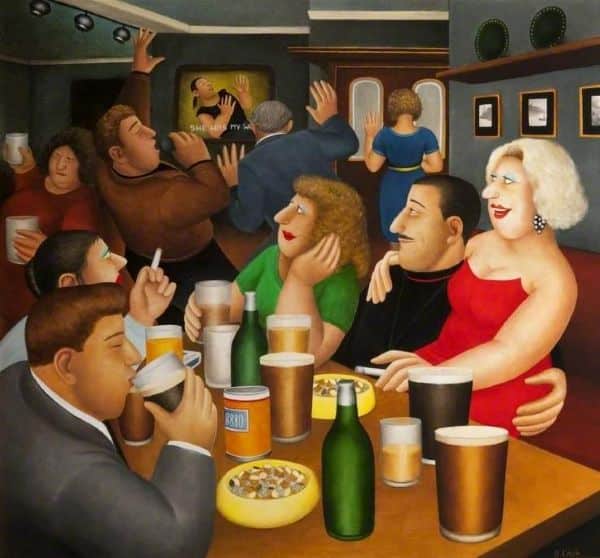
Beryl Cook
L.S. Lowry

Here are a few examples of the British Class system in action

  • Historically it was the class system which determined what you were not allowed to read . In the obscenity trial in 1960 following the publication of D. H. Lawrence’s Lady Chatterley’s Lover (in 1928). The judge’s much quoted remark in his opening statement as to whether the novel was something “you would even wish your wife or servants to read”.
  • For decades, Lowry was dismissed by the art establishment as a “naive Sunday painter” because he worked full-time as a rent collector and clerk until his retirement at 65. Not the least because his pictures represented working class life in Salford near Manchester.
  • In 1967, the ruling class at the BBC was forced to concede that working class pop music could be publicly broadcast on its new radio station, after years of everyone under 20 listening to illegal Pirate radio and a full five years since The Beatles first hit.
  • Which British Poet sold the most books in the UK in the 20th Century? Pam Ayers! where is she in the AI list of top 20 British Poets of 20th Century? Not a mention
  • “There Will Be No Beryl Cooks in Tate Modern,’ Says Sir Nicholas Serota, director of Tate modern, The Cultural Elite vs Britain’s Working Class Painter” The refusal of Tate Modern, in 2026, to collect or display the work of Beryl Cook is not a matter of taste, nor a neutral curatorial decision. It is ideological. Cook’s exclusion exposes a deep and enduring fault line in British cultural life: the discomfort of the cultural elite when confronted with the working classes not as objects of study, pity, or abstraction, but as active creators of culture.
Sexual intercourse began In nineteen sixty-three (which was rather late for me) –


Sexual intercourse began In nineteen sixty-three (which was rather late for me) – Between the end of the ‘Chatterley’ ban And the Beatles’ first LP. Philip Larkin

– Between the end of the ‘Chatterley’ ban And the Beatles’ first LP. Philip Larkin


Working class kids are very actively discouraged from studying the arts as, as described above, they are unemployable because they don’t have the right connections or the right accents. Sometimes the “Careers Officers” maybe being cruel to be kind. Not allowing working class kids to study the arts because they will never get a job. Or at the opposite end of the scale – allowing them to go to study arts at college and then not able to get a job.
My school careers officer recommended I become a Gas Fitter. As I don’t have a practical bone in my body I wonder how many houses I would have blown up

Further opportunities to watch

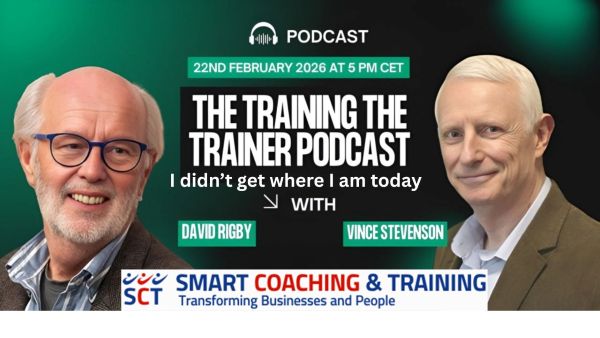
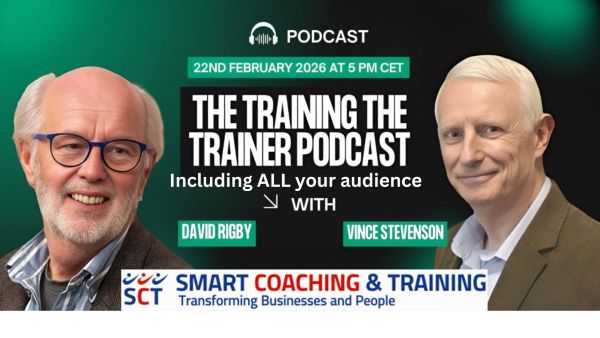
David Rigby’s recent PodCast conversation with Vince Stevenson , In two parts

  • “I didn’t get where I am today”
  • “Including ALL your audience “
I didn’t get where I am today – David’s Background

Click here to access the podcast on YouTube.

Including ALL your audience – catering for the variations in Audiences to get the most Impact

Click here to access the podcast on YouTube.

Smart Coaching & Training works with over 30 associates, in four continents speaking 14 languages. Most raised and working in a wide range of cultures and living in a different place than where they were born . See our associates here.

Many of our associates learned how to speak via Toastmasters and Professional Speakers Association Read more

Many of our associates are specialists in Diversity , Interculturality and related topics Read more here and here.

Written by David Rigby © 2026 Smart Coaching & Training Ltd
Filed Under: Being Confident, C-me Colour Profiling, Career Development, Change Management, coaching, leadership, Management, Personal Development, You and Your Career Tagged With: Communication, diversity, Interculturality, intersectionality, intuitive, performing, profiling, safespace, Smart Coaching & Training

17/02/2026 By David Rigby

Including all your Audience

Including all your Audience

Training the Trainer Podcast Vince Stevenson with David Rigby Sunday 22 February 1700 CET

Our guest for this session is another friend and colleague, Mr David Rigby, an intercultural leadership expert, mentor and coach. David is also a motivational speaker, trainer and the founding director of Smart Coaching & Training Ltd. David has worked in 22 countries, built teams across four continents, and has spent decades helping leaders navigate cultural differences with empathy and impact. His topics will include Things to consider when trying to engage and include ALL your audience whether, speaking, training or writing.

“Including ALL your audience” Podcast with Vincent Stevenson Part 2 February 26 watch here https://youtu.be/HNWYMJeZC8U

“I didn’t get where I am today” Podcast with Vince Stevenson Part 1 February 26 watch here https://youtu.be/0fbpdgEnHX0

This has a different focus that the podcast described below and was recoded in December.

To watch further The Training The Trainer podcasts, Vince Stevenson with special guests click here .

Training the Trainer Podcast

People & Purpose Podcast in December with Tarja Takko – summary

All the way from Finland – December 2025

In December’s episode of the ‘People & Purpose’ podcast, Tarja Takko sat down with David Rigby, intercultural leadership expert, mentor, coach, and founding director of Smart Coaching & Training, to explore why the ability to connect across cultures has become a strategic superpower for modern leaders. With experience working in 22 countries and building teams across four continents, David brings decades of insight into how leaders can navigate cultural complexity with empathy, clarity, and impact.

David’s journey -from a mathematics degree at London University to a global career focused on people, leadership, and communication- has shaped a practical and deeply human approach to leadership. His reflections offer a roadmap for leaders and organisations operating in increasingly global, diverse, and interconnected environments.

A Lifelong Curiosity for Cultures

David’s interest in intercultural leadership didn’t begin in a boardroom—it started early, through friendships, languages, and a genuine curiosity about people’s backgrounds. From spending time with international peers at university to learning Italian and Spanish, his path has been shaped by an instinctive openness to cultures beyond his own.

That curiosity evolved into a professional focus as he began working across Europe, the Middle East, Asia, and Africa. Over time, David observed that leadership assumptions that work in one context can fail completely in another.

“If you’re leading people only in one country, you tend to operate in the culture of that country,” David explains. “Intercultural leadership means dealing with totally different and sometimes conflicting ways of working at the same time.”

Understanding Cultural Differences in Leadership

A recurring theme in the conversation is the danger of assuming that leadership looks the same everywhere. David contrasts leadership norms in Northern Europe, where autonomy and individual decision-making are expected, with cultures in the Far East, where hierarchy and top-down decision-making remain the norm.

The challenge for leaders is not choosing one style over another, but learning how to navigate both simultaneously without imposing their own cultural defaults.

“The biggest blind spot is expecting people all to behave the same way,” David notes. “They just don’t.”

Recognising these differences allows leaders to avoid misinterpretation and frustration, and instead respond with cultural intelligence.

Communication Beyond Words

Effective communication, David argues, is not about speaking more, it’s about ensuring shared understanding. Even when people technically speak the same language, meaning can shift dramatically depending on cultural context.

He illustrates this through familiar examples: how phrases like ‘that’s quite nice’ can mean very different things depending on whether you’re British or US American, or how indirect communication styles can mask disagreement in some cultures.

“Successful communication is when both people understand the same thing,” David reflects, “even if they’re coming from totally different viewpoints.”

This requires leaders to listen carefully, avoid assumptions, and actively confirm understanding especially in cross-cultural and remote settings.

Connection, Belonging, and Trust

In global and hybrid teams, creating a sense of belonging doesn’t happen by accident. David emphasises that connection requires intention, sincerity, and effort particularly when teams rarely meet face-to-face.

Rather than relying on surface-level checklists, leaders must invest time in understanding people as individuals, beyond their professional roles. Knowing personal context -interests, backgrounds, experiences- builds trust and strengthens collaboration.

“Ticking all the boxes doesn’t work,” David observes. “People have to know you’re being sincere about what you’re doing.”

Humility as a Leadership Practice

One of the most powerful moments in the episode comes when David reflects on humility as a core leadership quality. For him, intercultural leadership begins with recognising what you don’t know and being willing to learn continuously.

This applies not only across cultures, but across generations, disciplines, and experiences. Leaders must balance confidence in their own expertise with openness to being challenged.

“Am I humble enough to learn things?” David asks. “You have to know that you don’t know it all.”

Building Teams, Not Just Hiring Individuals

David also challenges traditional approaches to talent and diversity. While diversity is often discussed in terms of representation, he stresses the importance of team balance—including cognitive diversity, thinking styles, and emotional perspectives.

Recruiting the “best individual” is less important than building a team that can think, collaborate, and problem-solve effectively together.

“You can get results very fast with the wrong team,” David explains. “But they’ll be the wrong results.”

True inclusion, he argues, goes far beyond compliance as it requires leaders to actively create environments where different perspectives are genuinely valued.

Leading with Purpose Across Cultures

For David, purpose-driven leadership is inseparable from intercultural maturity. Leaders who want their organisations to thrive long-term must care not only about short-term results, but about the people and systems that sustain them.

This means balancing profitability with psychological safety, inclusion, and development especially in global contexts where expectations and norms differ widely.

“If you want to keep doing this in ten years,” David reflects, “then that’s what leadership has to be about.”

A Mindset for the Future

David Rigby’s insights highlight that intercultural leadership is not a skill to be mastered once, but a mindset to be practiced continuously. It demands curiosity, humility, courage, and a willingness to step outside comfort zones.

By listening deeply, communicating with intention, and valuing difference rather than fearing it, leaders can build organisations that are not only globally effective, but deeply human.

On the People and Pupose

Watch the full episode here to hear the complete conversation and all of David’s insights on leading across cultures in a complex world.

Further opportunities to watch

David Rigby’s recent conference presentations

Inclusion IS the future – Conference Presentation Nov 25

Click here to access the podcast on YouTube.

Cognitive Inclusion: Building Transculturality Conference Presentation Nov 25

Click here to access the podcast on YouTube.

Smart Coaching & Training works with over 30 associates, in four continents speaking 14 languages. Most raised and working in a wide range of cultures and living in a different place than where they were born . See our associates here.

Many of our associates learned how to speak via Toastmasters and Professional Speakers Association Read more

Many of our associates are specialists in Diversity , Interculturality and related topics Read more here and here.

Written by David Rigby © 2026 Smart Coaching & Training Ltd
Filed Under: Being Confident, C-me Colour Profiling, Career Development, Change Management, coaching, leadership, Management, Personal Development, You and Your Career Tagged With: Communication, diversity, Interculturality, intersectionality, intuitive, performing, profiling, safespace, Smart Coaching & Training

04/02/2026 By David Rigby

How to destroy trust with AI

How to destroy trust with AI

Authenticity is key to creating memorable experiences

“I totally agree that authenticity is key to creating memorable experiences, especially in the hospitality industry where it can…” I received two comments on LinkedIn in response to a comment I had made about an associate’s post. Both started with these words, and both came from people employed in the same organisation (one is the CEO). The company is very well established as a leader in AI. So it’s a fair bet that these comments were generated by AI. In fact they are very proud that they do this.


My reaction : If cannot write to me personally then do not write to me at all. It has totally destroyed my trust in the people and the company. And I think: Are these photos created by AI?. Are the Videos using Avatars ? Is this message generated by AI?. The only time I am ‘reasonably certain’ I am talking to the real person is when I attend a webinar where there is interaction between the attendees and the presenters.

I am not impressed with organisations promising to personally message 10k people with personalised messaged as if they are from me. I like to select who I talk to and send specific messages to those individuals.

For the ‘Craic’ en Español
Is this the real thing? or is it just Fantasy
And then we get to the wise words invented by Meta to support the experience of Facebook . I posted a picture of me drinking Guinness in a local Spanish Bar. -not the least because it was freezing outside and we can take the dog in.
And Meta added “ Why is David Rigby in Madrid? Because on the post, it seems David Rigby is in Madrid to watch a football match between Real Madrid and Villareal. The casual setting of a pub with a TV showing the match and his enthusiastic comment “Where else but Madrid!” suggests he’s a fan of the sport or the teams playing “ (jan 26)
Anyone who knows me also knows I cannot stand football. And I was clearly, not clearly pointing out that the flyers and documentation about the Guinness were in Spanish., (try putting that through Grammarly !)
If it writes total garbage about what I know about why would I trust anything it says about stuff I don’t know about ?

I write as I speak

I write as I speak , with all the quirks of a Northern English man who has all the corners knocked off by working in 22 countries. It is completely beyond me why anyone would want to look like or sound like or write like some generic version of themselves . I know you can spend months trying to coax an AI version to be exactly like you .


“And I mean this most sincerely folks” was the catch Phrase of British TV personality Hughie Green in the 1960s and apparently was the most insincere and horrible man of the time.


And in conclusion, my message to the world: If you have got anything to say to me,
• Say it in person, don’t be excruciatingly polite
• Make it factual or your opinion (which is also a fact)
• Don’t make anything up if you don;t know – say you don’t, and make it short
• Don’t, therefore, hallucinate and just cut out the slop

Smart Coaching & Training works with over 30 associates, in four continents speaking 14 languages. Most raised and working in a wide range of cultures and living in a different place than where they were born . See our associates here.

Many of our associates are experts in AI and love it.

Many of our associates are specialists in Diversity , Interculturality and related topics Read more here and here.

Written by David Rigby © 2026 Smart Coaching & Training Ltd
Filed Under: Being Confident, C-me Colour Profiling, Career Development, Change Management, coaching, leadership, Management, Personal Development, You and Your Career Tagged With: Communication, diversity, Interculturality, intersectionality, intuitive, performing, profiling, safespace, Smart Coaching & Training

12/01/2026 By David Rigby

Overwhelmed – what to give up to make space for the new ?

Overwhelmed –  what to give up to make space for the new ?

As Christmas approached I was beginning to be overwhelmed. For the previous six weeks I had deadlines every other day. And while I was achieving them the underlying fundamentals where not being done.


Attending conferences and doing podcasts was one thing, having a visitor who broke her ribs was another, and being organized enough to stay in three different places over the holiday period was another, particularly regarding laundry. And this being Spain the weather is likely to be relatively very cold but potentially sunny. Every day required military planning.


Standing back enough was the challenge to realise you are overwhelmed. It’s happened to me before during the Christmas period. And the holiday period lasts for almost three weeks in Spain. So I decided to do no work.

Christmas Day English Sprouts Reyes (Jan6) Roscon

So I decided to do no work

Spanish Puchero and traditional Spanish New Years Eve Lamb

Noche Buena (Christmas Eve) with friends from South America – and my Spanish had turned into Italian. I couldn’t remember English either.Next day I spent making half British half Spanish Christmas lunch, and had to work out of to cook five vegetables simultaneously. Had Noche Buena, Noche Viejo and Reyes Spanish style , all with friends and at the last moment and not very formal, And In between: I have a cubic metre of physical photos so I spent the gaps scanning the negatives of maybe 5000 photos – and the scanned files still need sorting.

On the work front there are tasks which I have been completely unable to do, such as writing this, posting on the media and maintaining the website. They have had to wait.


In 2025 I spent time seeing people in Italy and Netherlands I haven’t seen in years, and attending many international zoom event, as well as attending local events in person . The conclusion is that some of those will have to go. And I also recognise that others have decided that I have to go – I am OK with that.


I am listening to the ‘overwhelmed’ podcast from Claudia Hammond on BBC is great for recognising it’s not just you. Taking time out to reflect helped me recognise I was in survival mode. You need to step out if it before you recognise it. I will be organised, with the infrastructure in a better position, to start again, by February. Meanwhile I will sort those Photos, and see I can continue to give up what I told myself to . The space created may give me time to embrace AI and do everything more effectively . Who knows? What about you ?

Smart Coaching & Training works with over 30 associates, in four continents speaking 14 languages. Most raised and working in a wide range of cultures and living in a different place than where they were born . See our associates here.

Many of our associates learned how to speak via Toastmasters and Professional Speakers Association Read more

Many of our associates are specialists in Diversity , Interculturality and related topics Read more here and here.

Written by David Rigby © 2026 Smart Coaching & Training Ltd
Filed Under: Being Confident, C-me Colour Profiling, Career Development, Change Management, coaching, leadership, Management, Personal Development, You and Your Career Tagged With: Communication, diversity, Interculturality, intersectionality, intuitive, performing, profiling, safespace, Smart Coaching & Training

  • « Previous Page
  • 1
  • 2
  • 3
  • 4
  • …
  • 16
  • Next Page »

Contact Info

+44 (0)7788 425688
[email protected]

Smart Coaching & Training Ltd, Reg No 08362126

  • Facebook
  • Instagram
  • LinkedIn
  • Substack
  • Twitter

Recent Featured Posts click on pic to see title and connect to article

Papa had a rolling schedule: Sietar Valencia International Congress June 2026

Including All Your Diverse Audience

Social Media

We mostly post to David Rigby’s Linked In  and  Facebook

Instagram

Papa had a rolling schedule:
Including All Your Diverse Audience
Including All Your Diverse Audience https://www.smartcoachingtraining.com/including-all-your-diverse-audience

Facebook

Copyright © 2026 Smart Coaching & Training All Rights Reserved · Privacy Policy · Terms of Service · Privacy Settings