Smart Coaching and Training | Business Support, Consultancy, Mentoring

Transforming Businesses and Lives | Coaching, Mentoring & Training for Excellence

  • Facebook
  • Instagram
  • LinkedIn
  • Twitter


+44 (0)7788425688 | [email protected]


  • Home
    • Coaching News
    • Our Clients
    • About Us
      • Our Team
      • Our Scope
      • Our Approach
      • Social Value
  • People
  • Diversity
    • Artificial Intelligence, Interculturality and Diversity
    • Diversity: Interculturality
    • Diversity: Neuro Diversity
    • Diversity: Cognitive Diversity
      • Profile
    • Diversity: Gender and Sexual Diversity
    • Diversity: Colonialism, Class, Nationality, Ethnicity, Race and Beliefs
    • Diversity: Generational Diversity
    • Diversity: Intersectionality
      • Diversity
  • We Offer
    • Coach
    • Speak
    • Train
    • Consult
    • Wellness at Work
    • Psycho-social Adult Development
  • Profile
    • Behavioural Preference Profiling with C-me
    • Career Preference Profiling with Benchmark
    • C-me comparison to other profiling tools
  • Speak
  • Coach
  • Train
    • Signature Corprate Training, Longer courses and Retreats
    • Workshops and Short Courses
    • On-Line Courses
  • Consult
  • Español
  • Contact

27/03/2026 By David Rigby

Finally: New rebels in Music

Finally: New rebels in Music

when youth rebellion took music away from the staid BBC

At the start of the 1960s , at least in the UK, popular music was in a pretty bad way. It was controlled by the marketing men and the young stars had do what they were told. Some rebellious music had started such as skiffle and The Twist.  There was no legal alternative to the BBC whose policy was to ignore such trends.  Light entertainment and big comedy shows such as ‘Round The Horne’ would often feature two musical breaks because the audience couldn’t concentrate for long.  Typically one would be a brassy song from a Musical or Standard, and the the other would feature some trio trying to turn a traditional song into jazz.  Radio Luxembourg and illegal offshore pirate radio would play the then emerging challenges to the BBC who finally introduced Pop radio in 1967.  

Until 1962 most popular music was catchy little tunes or big ballads all adhering to the same safe formula with an orchestra of ex World War 2 marching traditions.  Then there was the scramble to sign up any four people who could get together and form a group. And hence the British Invasion which challenged the status quo in the USA.

RAYE whose new music may contain hope
As at summer 2025, Music today, especially in USA is in the same position today. Identical  tunes by identical singers sticking to the same formulas as the 1980s. Only this time written by 17 writers or ChatGPT.  The mavericks have been British, Amy Winehouse and Adele being the classic examples. They would never have been home grown from the USA.
If you go into any café, restaurant or bar today they are playing music from 1960s, 70s, 80s and occasionally the 90s .  It would be unimaginable to have gone into a café in the 1960s and listened to the songs of 1910 and 1920.

Bad Bunny, Olivia Dean and RAYE
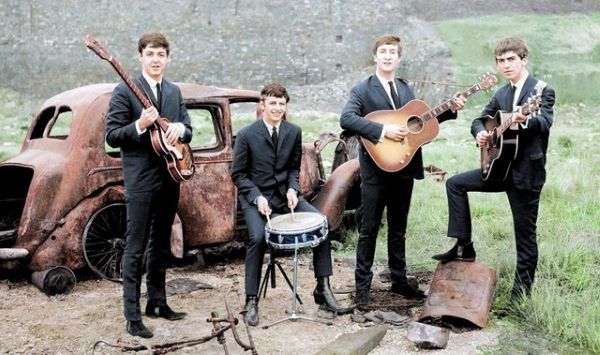
The Beatles in 1962

In the mid sixties music crossed over from having white people making sanitised versions of black music to the real thing , with Motown leading the way.  It has now become segregated again.  

Personally I still collect Cds (I got rid of the Vinyl years ago), though I think I only have two which were recorded this century.  And listen to new streamed music from Sabrina Carpenter, Taylor Swift and the slightly more original Chapelle Roan  and its totally derivative and safe (except for the provocative videos). Bring on Bad Bunny, at least it’s got some fire in it’s belly.  And find some new folks as original as the Beatles came to be.

Postcript: This article was written in summer 2025.  A lot has happened since then, at least for me: America is still loving the droning from  Lana Del Rey and Billie Eillish but elsewhere there is magic from Rosalia, Olivia Dean and above all RAYE. All these have rebelled against the management, particularly RAYE whose new album released on 27th of March got a 5 star review. It will become the third CD I have bought with music actually recorded in this century and like Rosalia cannot be considered as easy listening .  If you listen you too will have the challenge of which of her songs to practice for karaoke (answer none- they are all impossible). Where the music contains hope, and success comes to those strong enough not to follow their advisors requirement for safety.

Smart Coaching & Training associates are all rebels. They have carved their individual ways to the top by the force of their own convictions and personalities. Not being corporate means they are best position to challenge and advise the corporate,

Smart Coaching & Training works with over 30 associates, in four continents speaking 14 languages. Most raised and working in a wide range of cultures and living in a different place than where they were born . See our associates here.

Many of our associates are specialists in Diversity , Interculturality and related topics Read more here and here.

Written by David Rigby © 2026 Smart Coaching & Training Ltd

Filed Under: Being Confident, Change Management, coaching, Cognitive Bias, Emotional Intelligence, Global teams, Interculturality, leadership, Management, Managing Change, Mentoring, Personal Development, You and Your Career Tagged With: Communication, diversity, Interculturality, intersectionality, intuitive, performing, profiling, safespace, Smart Coaching & Training

13/03/2026 By David Rigby

Watch, Read and Live Interculturality with Samar

Watch, Read and Live Interculturality with Samar

Authenticity is key to creating memorable experiences

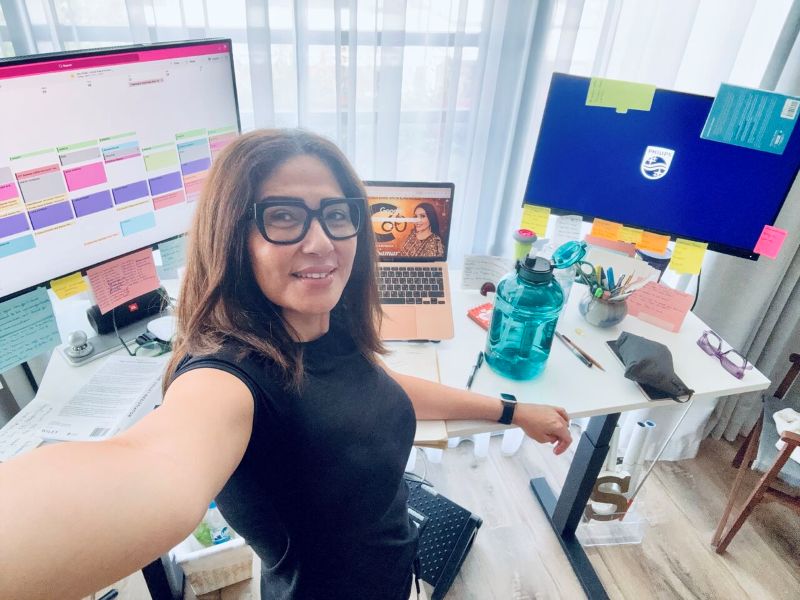
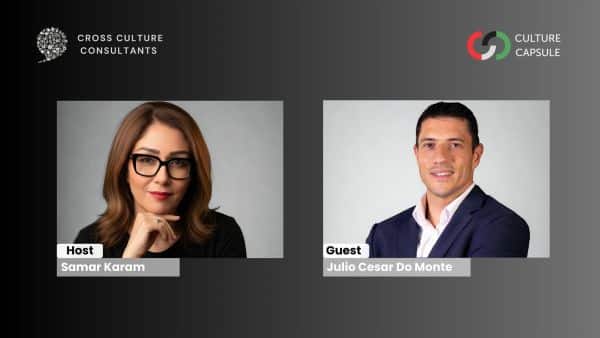
Marhaba! Welcome our new associate Samar Karam see her details here. Read her article about AI below.

Her ‘Culture Capsule’ podcast on Tue, Mar 17, 2026, 8:00 AM CET features experts and thought leaders from around the world and each episode explores a unique cultural layer that helps you simplify and understand life in the UAE.

“In this episode of ‘Culture Capsule’, I welcome global business leader Julio Cesar Do Monte, a true international executive whose career has taken him across six countries and four continents. Julio currently serves as the Area Vice President Russia, Africa, Middle East and Turkey (RAMET) at Kenvue based in Dubai. Based on his impressive track record in leading multinational companies such as Kenvue, Johnson & Johnson, Boehringer Ingelheim, Unilever, and Danone in complex markets across the Middle East, Russia, Africa, and Turkey, Julio shares what it means to lead in multicultural environments where culture, communication, and adaptability shape success.

Culture Capsule is for expats, visitors, and curious thinkers, anyone who wants to understand the UAE beyond assumptions. Tune in, please click here for full details on how to Attend or on ‘Attend’ in order to be notified when we go live! It will be recorded

Tuesday 17th March 8AM CET or watch the recording
Our conversation explores:

• Life as a global expatriate and how constant relocation shapes perspective
• How international careers impact family life and identity
• Navigating culture shock
• Building trust through human-centered leadership and daily connection with teams
• Supporting employee mental health, resilience, and well-being in challenging times
• How AI tools are transforming productivity and the future of work
• Leading through uncertainty, with lessons inspired by leadership approaches in the UAE

Artificial Intelligence as used in Middle East

A recent LinkedIn posting by Samar Karam

Samar Karam communicating with her fans (the world)

I thought I knew the strategy well enough. Working daily with culture, communication, and expats in the Arab world, I assumed that most AI platforms were more or less smart and equally helpful, interchangeable. I thought that I did my homework!
I was wrong.
If you work, live, visit, or lead in the Arab world, and you still think AI tools are culturally neutral, it’s time to think again. Or let me help with this article.

Why Cultural Intelligence Matters More Than “Smart AI” in the UAE?

In my work with expats, leaders, and relocating families in the UAE, I have learned one simple truth:

Communication fails here, not because people lack talent, but because cultural signals are missed.

That is why I paid close attention, perhaps later than I should have as a professional, to what kind of leadership AI is offering in my Arab world. When the UAE’s Office for Artificial Intelligence introduced the AI in the Ring Index, I did not initially pause to see it for what it truly was: not a technology ranking, but a reflection of cultural intelligence. At the time, I treated most AI platforms as a new tool with a strategy and maybe a threat.

Only recently through patience, research, careful observation, and conversations with trusted peers working in cultural intelligence—did my perspective sharpen. It became clear that not all AI systems lead to equal results when it comes to culture in the Arab world, and that distinction matters deeply in real professional and human contexts.

A Different Kind of Benchmark—and Why It Matters

Unlike typical AI benchmarks that focus on IQ-style problem solving or coding ability, the AI in the Ring Index asked a far more relevant question for life and work in the UAE: an an AI understand Emirati identity, values, and social reality well enough to communicate without causing friction?

To explore this, more than 400 culturally focused questions were designed, generating around 5,200 responses from 11 leading AI models. Model names were deliberately hidden so Emirati evaluators could assess the responses without brand bias—a practice very familiar to those of us who work in cultural assessment.

What Was Actually Measured (And Why Expats Should Care)

Emirati cultural experts evaluated the AI responses across seven deeply human dimensions:

  • Historical and national context
  • Creative and poetic expression
  • Emirati Arabic and dialect use
  • Cultural symbols and shared meanings
  • Social norms and etiquette
  • Social and religious sensitivity
  • Emirati values and ethics

In addition, a custom red-teaming approach pushed models into awkward, sensitive, or ambiguous cultural situations, the very moments where expats and organizations tend to struggle most. Outputs were monitored for bias, misunderstanding, overconfidence, or subtle disrespect. As a cultural trainer, I recognized this immediately: this is exactly how cultural competence is tested in real life.

Why This Matters for Expat Professionals and HR Leaders

For expats working in the UAE, especially in HR, leadership, relocation, and people-facing roles, cultural accuracy matters more than creativity or speed.

When drafting:

  • Arabic-facing emails
  • Ramadan or national occasion messages
  • Policy explanations
  • Leadership communication

The cost of language that is “almost right” can be high.

This is where Gemini emerges as a reliable reference point—not because it is perfect, but because it has been explicitly tested against Emirati cultural expectations. For many expats, Gemini functions best as a cultural calibration tool: “Is this how this would land locally?”

Why Emiratis Working With Expats Can Use ChatGPT Effectively

On the other hand, Emiratis and culturally fluent professionals working with expats often need something different:

  • Explanation
  • Reframing
  • Creative translation between worlds
  • Strategy and structure, often in English

Here, ChatGPT becomes extremely effective because cultural fluency already exists on the human side. The AI supports thinking and articulation it does not replace cultural judgment.

This distinction matters.

Gemini vs. ChatGPT in the Arab World: A Practical View

A clear pattern is emerging across the region: Gemini is becoming the stronger choice for Arabic-heavy and Google-centric workflows, while ChatGPT remains ahead in ecosystem breadth, integrations, and certain creative tasks

For HR, relocation, and leadership teams, this distinction matters far more than raw technical capability.

Arabic Language Quality: Breadth vs. Precision

Gemini

  • Supports 16+ Arabic dialects, including Gulf, Levantine, Egyptian, and Maghrebi
  • Produces Arabic that feels less translated and more native, particularly in Gulf contexts
  • Handles mixed dialect and Modern Standard Arabic (MSA) more naturally in day-to-day writing

ChatGPT

  • Has improved significantly in Arabic and Arabic–English mixed text
  • Still tends to default to more formal MSA
  • Can sound slightly off in Gulf tone, hierarchy, or social pacing

In practice: For everyday Arabic writing emails, HR announcements, internal communications Gemini often sounds closer to how people actually write and speak in the Gulf. ChatGPT remains strong but may require more cultural editing.

Cultural Fit: UAE vs. the Wider Arab World

Gemini aligns particularly well with Emirati and Gulf cultural norms, especially around:

  • Business etiquette
  • Religion-adjacent topics
  • Formality and restraint
  • Professional hierarchy

This makes it especially suitable for:

  • UAE-based organizations
  • Government-adjacent or semi-formal environments
  • Public-facing corporate communication

However, neither model fully captures the diversity of the wider Arab world. Beyond the UAE—into Saudi Arabia, Egypt, the Levant, or North Africa dialect carries deeper social meaning, and “neutral Arabic” can feel emotionally distant.

In these contexts, human cultural review is essential, regardless of the AI used.

Availability and Integration in the Region

Gemini

  • Fully available in Arabic via Gemini and Gemini Advanced
  • Deeply integrated into Google Search, Gmail, Docs, Sheets, Drive, and Maps
  • Especially practical for organizations already using Google Workspace across MENA

ChatGPT

  • Fully available across the UAE and GCC
  • Strong integration with Microsoft 365, Azure, and enterprise systems
  • Widely adopted across institutions and large organizations

Operational reality: Most organizations choose AI not only for language quality—but for where the tool already lives.

Where Each Tool Tends to Win

Gemini excels at:

  • Day-to-day Arabic writing and editing
  • Multi-dialect handling in Gulf contexts
  • Culturally aware Arabic search and chat
  • Seamless use inside Google tools common in MENA

ChatGPT excels at:

  • Broader third-party integrations
  • Microsoft-centric environments
  • Creative and strategic tasks (code, ideation, experimentation)
  • English-first work with occasional Arabic support

The Strategic Insight Most Teams Miss

AI does not fail in the Arab world because it lacks intelligence. It fails when organizations confuse linguistic correctness with cultural belonging.

Used thoughtfully, AI can:

  • Support clarity
  • Reduce friction
  • Accelerate communication

Used carelessly, it can:

  • Flatten nuance
  • Miss hierarchy
  • Undermine trust

In my humble opinion, the responsibility for cultural intelligence still sits with humans. That is the lens through which this conversation should continue.

Smart Coaching & Training works with over 30 associates, in four continents speaking 14 languages. Most raised and working in a wide range of cultures and living in a different place than where they were born . See our associates here.

Many of our associates are experts in AI and love it.

Many of our associates are specialists in Diversity , Interculturality and related topics Read more here and here.

Written by David Rigby © 2026 Smart Coaching & Training Ltd from content from Samar Karam
Filed Under: Being Confident, Change Management, coaching, Cognitive Bias, Emotional Intelligence, Global teams, Interculturality, leadership, Management, Managing Change, Mentoring, Personal Development, You and Your Career Tagged With: Communication, diversity, Interculturality, intersectionality, intuitive, performing, profiling, safespace, Smart Coaching & Training

12/11/2023 By David Rigby

Roads were invented so that men could drive to work

Roads were invented so that men could drive to work

The myth of the fifteen minute city

“Roads were invented so that men could drive to work in their cars” -and therefore are bad. This was the quote I remembered when I listened to BBC Radio 4 podcast – Future Cities – in which Tori Herridge was listening to Katrina Johnson-Zimmerman . (I can’t describe it as interviewing – more like curtsying). She appears to be in Philadelphia and by the time she got to Phoenix at the age of 20 it was her first exposure to a city..

No need for transport as everything is walkable

She explained her concept of the 15 minute city where anyone could walk or cycle in 15 minutes to everything they could possibly need. And that any road with more than one carriageway should be reduced to one to allow cycle-paths. Not a mention about the need for fast cheap and reliable public transport because clearly you don’t need it as ‘you ain’t going nowhere’.

The fifteen minute village

Now I live in a small village by the sea in Spain. Some of it is 500 years old and so clearly is not high rise. It’s quite possible to walk from one end to the other in 15 minutes. There are at least 10 supermarkets and local stores such as butchers, fruit-shops and pharmacies. And there are two health centres and community centres. And maybe 50 cafes and restaurants for the tourists.
A lot of the centre is pedestrianised. So far so good. I chose to have no car. It’s 300 steps from the beach, transport and main shops to my house. While I am not young, I am still able to carry my shopping but could not contemplate using a bicycle and neither can most other people, and I wonder for how long I can continue to walk.

Altea Spain – 15 minute village
Altea Spain – 300 steps
Altea Spain – 15 minute village

Why escape ?


Still, everything I could possibly want is there. So why is it I continually want to escape?

  • I need intellectual stimulation. Most of the old folk’s conversation is about what they had for lunch.
  • I want to experience good original food from many different cultures not touristifed.
  • I want to see the Art Galleries, attend good music events, and spend face to face time with friends and colleagues who are stimulating – and go to meet people for work.

None of this is available where I live. So II spend my time between the cities of Valencia, Madrid and Barcelona. It takes 2-3 hours on public transport to travel the 60km to the nearest mainline train and then the trains are frequent and cheap and that 2-3 hours is a reason I will move.

15 minute cities Lincoln Nebraska USA, (courtesy Getty Images),Hong Kong and Dubai (several)

Worldwide experience of fifteen minute cities

Prior to this I worked in 22 counties including

  1. Lincoln, Nebraska – a fifteen minute city which closes at 1800 every day. I rented a car and escaped every weekend it was so boring.
  2. Hong Kong – a fifteen minute city because everything of interest is within one square mile. And you can go on a pub crawl by going to several bars on different floors in the same building. Escaped by boat!
  3. Dubai a fifteen minute city insofar as within 15 minutes of anywhere is everything, high density high rises everywhere. But despite the tram system and buses they need 10 lane highways not the least because the Emiratis and the elite still insist on driving everywhere in their SUVs and expensive sport cars. And in summer after 10 minutes outside you need a shower. There were places I would not live such as Jumeirah Lakes Towers, Dubai Marina or near Burj Khalifa because they were the most likely to get bombed.

The ultimate case for the 15 minute city is that your enemy can bomb it easily – let me think of an example close to Israel. Katrina Johnson-Zimmerman didn’t mention that point.

Smart Coaching & Training works with 20 associates, in four continents speaking 12 languages and raised and working in a wide range of cultures. See our associates here.

Meet Author David Rigby at Professional Speakers Association (Spain) , convention in Barcelona November 18th.

Written by David Rigby © 2023 Smart Coaching & Training Ltd

Filed Under: Being Confident, coaching, Communication, Emotional Intelligence, Future Planning, Mentoring, Mindset, People Development, Personal Development, Training, Wellbeing Tagged With: bombing, clowninng, cycling, fifteen minute cities, HongKong, innerclown, nebraska, performing, Smart Coaching & Training

28/10/2023 By David Rigby

Getting your fill of Interculturality

Getting your fill of Interculturality

Food and Interculturality.

Last week I thought I would go for some foreign food – so I found a cultural ghetto and chose some typical food of the ghetto. It always helps to be familiar with local ghetto food.

Mushy Peas ?

So I chose Fish & Chips with Mushy Peas accompanied by Tea with Milk. Where was I? Benidorm, Spain inside the English ghetto. Potato Chips (French Fries) made from real potatoes without emulsifiers etc, And most British wouldn’t know what Mushy Peas is.

Ghetto Restaurants

Most places in the world have cultural or food ghettos. What do you do if you are invited to a ghetto restaurant by a client from that country, or indeed elsewhere?
Forget the “I know what I like, I like what I know “ brigade. Your client is entertaining you and it’s incumbent on you to know what you are ordering and to eat it.

Ghetto Food in Spain: Fish Chips Mushy Peas Tea

Two Choices

Local Spanish food eaten by the author in the last month – you can’t order unless you know its name

You have two choices – either understand the menu and make your own choices or ask your host to choose. And in all cases take into account you or your host’s religious restrictions. Whatever you receive you better know the custom and eat all of it to show appreciation or leave a little or the host will order more on your behalf.

Building Intercultural Relationships through food

This is how good relationships are formed. And that can lead to business.  So what can you do to make this a success ?

  • Learn to understand the menus. This is crucial.  Spanish dishes have names from which you cannot tell the ingredients nor the way they are made. So do Philippine ones. I ordered enough for 6 in a Filipino restaurant in Dubai.
  • Learn how many dishes to order – the size of the portions.  In Europe: Starter – main course -desert – cheese.  (except in France where the cheese comes before the dessert).  In Spain they have Pinxos, tapas, Media Raciones, Raciones and that’s just for the starters or instead of a main course.  In Britain Spaghetti Bolognese is considered a main course, in Italy it isn’t. It’s what you eat before the main course. In Italy, as a guest I requested a second plate of  delicious home-made pasta, then had to eat two more main courses to not insult the chef.
  • Learn who you might or might not meet.  I was privileged to be invited to the home of one of my Pakistani clients.  While I never identified what the food was, it was delicious,. The chef, who was his wife, I never met because that is the custom.
  • Understand Cutlery. Some people eat with their right hand. Learn how to do it as you may not get an option.  Some people, likewise, eat with Chopsticks. Learn how to do it.  In Spain and Italy you get one knife and fork no matter how many courses (I went to an Italian dinner with 14 courses – I ate all of the first 7, some of the next three then fell asleep). In UK you get an array of cutlery learn what to use.  And use the fork in the left hand to put food in the mouth, Americans use a fork in the left hand to cut the food and then transfer the fork to the right hand to eat.

Just a few of the things to consider on the way to becoming interculturally competent while eating. Read more here

Smart Coaching & Training works with 20 associates, in four continents speaking 12 languages and raised and working in a wide range of cultures. See our associates here.

In conjunction with Professional Speakers Association (Spain) , SCT’s David Rigby will be present at the TEDx Marbella Spain event on June 9 focussing on Entrepreneurs

Written by David Rigby © 2023 Smart Coaching & Training Ltd

Filed Under: Being Confident, coaching, Communication, Emotional Intelligence, Mentoring, Mindset, People Development, Personal Development, Training, Wellbeing Tagged With: clowninng, feeling, humour, innerclown, intuitive, keeping tradition, laughter, logical, performing, psychological safety, Smart Coaching & Training, thinking

15/09/2023 By David Rigby

A journey onto and across the bridge of consciousness

A journey onto and across the bridge of consciousness

Save the date: this Thursday 21 September 2023 FREE event

Supporting the evolution of the individuals and teams through their journeys of expanded awareness and challenge – A journey onto and across the bridge of consciousness.

Life is often a “leap of faith” when undergoing stages of significant life changing transition — loss, birth, the responsibilities of parenthood, a career change — while sometimes we are confronted with circumstances way beyond our control or understanding of why they are happening to us.

In these moments, we grapple with profound questions:

  • What and Why are all these situations happening?
  • Why are the strategies that once served me no longer working?
  • What have I done wrong to deserve this?
  • Who am I really? Do I actually have a purpose?
  • Which path should I tread?

Often, faced with the above people continue forward without really addressing the questions, slipping back into autopilot. They lose connection to their core self, staying too connected to the familiarity of the ego and lower self; sometimes, this leads to depression, anxiety, or burnout.

Coaching aims to work with individuals and teams as coachees to help support them walk “their path less travelled” (Their unique journey) by trying to identify where the coachee is positioned and operating from on the consciousness bridge of the Soul, between the mundane 3rd dimensional ego world on one side of the bridge through to the higher spiritual dimensions of the Spirit on the far side. The step we need make is the next one on the path, but where am I? In our upcoming webinar, three coaches from diverse fields and working with different stages on the bridge will share their personal stories — starting with Leadership Coach Dr. Pari Namazie, Psychosynthesis Counsellor and Coach Sheona Della-Fort and Wizard, Corporate Alchemist and Practical Mystic Malcolm Lewis; all expertly moderated by Founder of Smart Coaching & Training David Rigby

They will try to reveal how they redefined their purpose as a result of spiritual experiences, overcame their own unique challenges and pay this forward to the people and communities they encounter.

They will share:

  • What transitions did they go through?
  • What was their learning?
  • What role did Presence and Spirit Based Coaching play for them?
  • How do they support others in their journey?

Join us as we explore the transformative potential of Presence and Spirit Based Coaching (PSBC), learn from the experiences of these remarkable coaches, and embark on a journey towards integrating body, mind, and spirit, and reconnecting with your inner wisdom.

The Power of Presence and Spirit Based Coaching WEBINAR 21 September 2023

Join Smart Coaching & Training’s Presence and Spirit Based Coaches Dr Pari Namazie, Malcolm Lewis and Sheona Della-Fort on 21 September 15:00-15.45 CEST (14:00 to 14:45 BST)(17:00 to 17:45 GST) to hear how they guide individuals through a transformative process of self-exploration and personal growth. They employ a unique and holistic approach that emphasizes the integration of body, mind, spirit, and soul to help their clients tap into their fullest potential. Book your place for this FREE event via eventbrite link here.

Smart Coaching & Training works with 20 associates, in four continents speaking 12 languages and raised and working in a wide range of cultures. See our associates here.

Written by David Rigby © 2023 Smart Coaching & Training Ltd

Filed Under: coaching, Mentoring, People Development, Personal Development Tagged With: feeling, intuitive, performing, power, presence coaching, psychological safety, Smart Coaching & Training, spiritual coaching, thinking

  • 1
  • 2
  • 3
  • …
  • 7
  • Next Page »

Contact Info

+44 (0)7788 425688
[email protected]

Smart Coaching & Training Ltd, Reg No 08362126

  • Facebook
  • Instagram
  • LinkedIn
  • Substack
  • Twitter

Recent Featured Posts click on pic to see title and connect to article

They say it’s your birthday

How I discovered Meaning and Purpose

Social Media

We mostly post to David Rigby’s Linked In  and  Facebook

Instagram

My Intercultural Birthday https://www.smartcoachingtraining.com/they-say-its-your-birthday
Just the truth and said better than could and it needs saying over and over again
How I discovered Meaning and Purpose

Facebook

Copyright © 2026 Smart Coaching & Training All Rights Reserved · Privacy Policy · Terms of Service · Privacy Settings